
Language skills: How to pronounce the letters of the Spanish alphabet
 Tus Media
Becoming familiar with the Spanish alphabet (el abecedario) is the first essential step of learning the language. While many letters look similar to those in the English alphabet, they’re not always pronounced the same way, and some have completely different sounds, names and rules.
Whether you’re studying independently, considering online Spanish lessons or preparing to travel across Spain or Latin America, understanding how individual letters are pronounced sharpens your reading skills, boosts your spelling ability and increases your confidence when conversing with Spanish speakers.

In this guide, we’ll present the alphabet in three sections based on the difficulty that many English-speaking learners experience when tackling different letters:
- Letters that are easy to pronounce for beginners
- Letters that seem familiar but which sound different
- Letters that take more effort to use correctly
Let’s get started!
Content Table
Key takeaways
-
Spanish is a Romance language that originates from Latin
-
Both the written and spoken forms of Spanish have been shaped by medieval writing traditions and the influence of Arabic
-
The Spanish language has been officially standardised by the Real Academia Española since 1713
-
The modern alphabet has 27 letters, with ch, ll, and rr classed as separate sound combinations
-
Spanish spelling is highly phonetic, with predictable letter–sound relationships
-
Pronunciation varies across Spain, Mexico, and Latin America, but the alphabet itself remains the same
The Spanish alphabet: history and structure
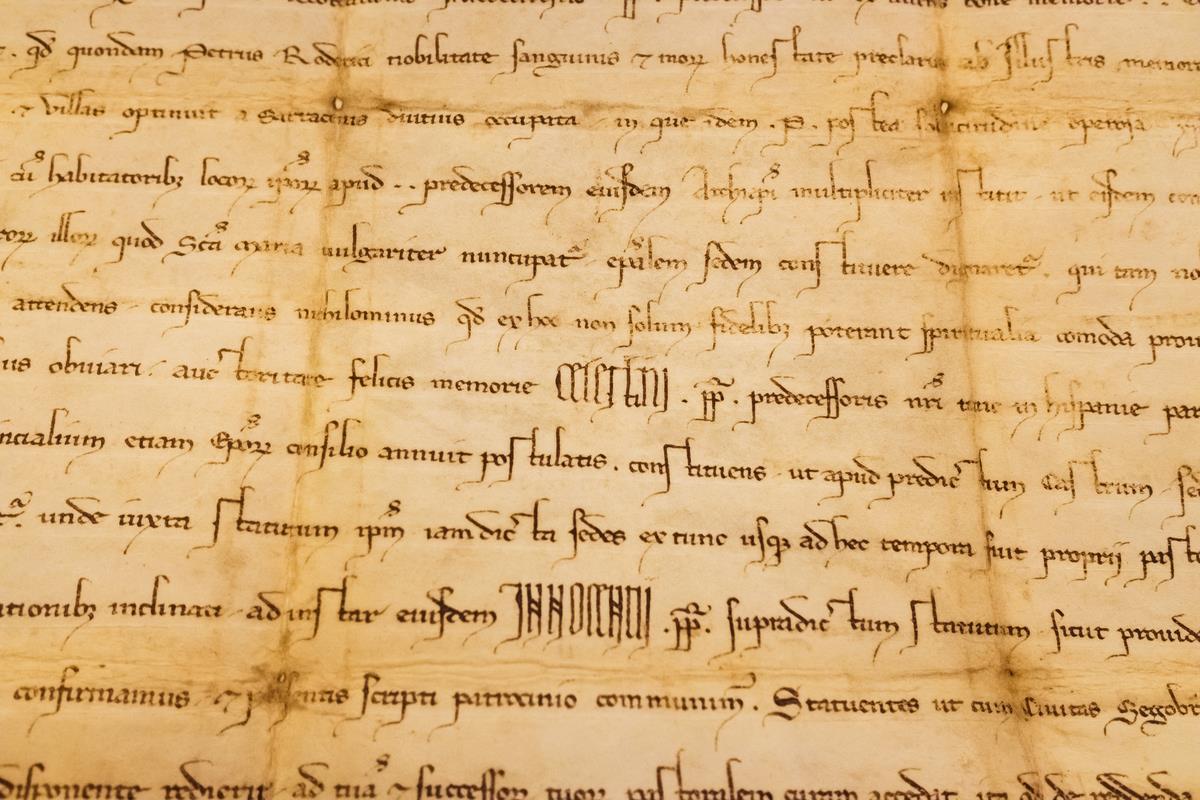
The Spanish alphabet evolved from Latin. Since its beginnings, it has been shaped by the religious and secular work of medieval scribes, evolving regional pronunciations across Spain, and later by the growth of the language throughout Central and South America.
The Real Academia Española (RAE) is the official royal institution on the Spanish language, and it has standardised spelling, pronunciation rules and letter classification since the 18th century. Any changes to the structure of modern Spanish must by approved by this authoritative body in order to be recognised and implemented at the state level.
The phonetic structure and consistent rules of the Spanish alphabet make it one of the most learner-friendly writing systems for English speakers. Written forms closely match pronunciations, making the sounds of words consistent, and relatively easy to read aloud.
How many letters are in the Spanish alphabet?
The official Spanish alphabet has 27 letters in total. It also has three specific letter combinations with special pronunciation rules:
-
ch
-
ll
-
rr/doble erre
Let's make life easy and take a look at the most accessible letters first!
Section 1 - Letters that are easy to pronounce
For the most part, these letters in the Spanish alphabet have one sound each, and behave similarly to their English counterparts.
A, E, I, O, U – The five pure vowels
Spanish vowels are always pure, meaning that unlike English vowels, they never change their quality: mouth shape, tongue position, nasality and sound duration. This stability is part of why Spanish pronunciation is so consistent:
|
Spanish letter |
Name (in Spanish) |
Pronunciation |
Example Spanish words |
|---|---|---|---|
|
A |
a |
“ah” |
casa, mamá |
|
E |
e |
“eh” |
mesa, bebé |
|
I |
i/i latina |
“ee” |
vino, fin |
|
O |
o |
“oh” |
sol, coco |
|
U |
u |
“oo” |
luna, tú |
You should know:
-
When a vowel has an acute accent, or tilde (á é í ó ú), it changes the stressed syllable of a word. We'll cover acute accents later in the article!
-
In most words, the final syllable is only stressed if there is an accent mark.
-
The name i latina ('Latin i') is used to distinguish this letter from y griega ('Greek y'), which we'll encounter later on.
M, N, D, S, T, L, P, F, B/V – Basic forms
These consonants are very close to English sounds and appear frequently in Spanish words. Notice that the letters b and v in Spanish share the same sound:
|
Letter |
Letter name |
Pronunciation tips |
Example |
|---|---|---|---|
|
M |
eme |
Like English “m” |
mano |
|
N |
ene |
Like English “n” |
noche |
|
D |
de |
Like English "d" |
dinero |
|
S |
ese |
Always a soft “s” like “snake” |
sol |
|
T |
te |
Cleaner “t” with no puff of air |
taza |
|
L |
ele |
Like English “l” |
lago |
|
P |
pe |
Soft, unaspirated |
papa |
|
F |
efe |
Like English "f" |
familia |
|
B/V |
be/ve chica (ve corta) |
Both letters = same sound |
vaca, banco |
You should know:
In the Spanish speaking world, b and v are pronounced identically. When spelling words aloud, we use their names ve chica (b), ve corta (v), to distinguish between the two letters.
That's the easy part - now let's explore some more complex letters!

Section 2 - Letters that sound similar...But not quite the same
These letters look familiar to English speakers, but they contain plot twists! They have slightly different tongue positions and unique sounds, together with pronunciation rules that vary by location.
C and G – Two different pronunciations per letter
Both c and g change their sound depending on the vowel that follows.
C
The letter c in Spanish is called ce:
|
Used before |
Sound |
Example |
|---|---|---|
|
A, O, U |
hard “k” |
casa, cosa, cuna |
|
E, I |
“th” (Spain)/ “s” (Latin America) |
cena, cine |
G
The letter g in Spanish is called ge:
|
Used before |
Sound |
Example |
|---|---|---|
|
A, O, U |
hard “g” |
gato, goma, gusto |
|
E, I |
hard “h” |
gente, girar |
K - Used for loan words
The letter k in Spanish is pronounced using the same sound as the English k. It is used in words that Spanish has absorbed from other languages, including French, Japanese, Māori, and many others.
|
Letter |
Name |
Sound |
Example |
|---|---|---|---|
|
K |
kah |
hard "k" |
kilo, karate, kiwi |
J - The strong “H” sound
The Spanish j has a harder sound than the equivalent English letter. It is used in Spanish spoken across Spain, Central and South America, and Mexico.
|
Letter |
Name |
Sound |
Example |
|---|---|---|---|
|
J |
jota |
Harsh “h” from the throat |
jamón, jugar |
R – One letter, two different sounds
The letter 'r' has two different pronunciations:
|
Type |
Sound |
Example |
|---|---|---|
|
Single R |
soft tap (like “tt” in “butter”) |
pero |
|
Doble R (erre) |
strong trill |
perro, carro |
A characteristic sound of the Spanish language, the double r sound is trilled, which poses a challenge for many English speakers in the beginning. Here's how to get started:
-
Place your tongue lightly against your alveolar ridge (just behind your upper front teeth).
-
Relax your tongue - it must be loose enough to vibrate when air passes over it.
-
Push air out steadily and strongly, as if you’re trying to say a very fast “t” repeatedly.
-
Think of the sound as a trill, similar to a cat purring!
-
Start with isolated practice: simply try vocalising “tttttt” quickly while keeping your tongue relaxed.
-
Then move to pronouncing simple syllables like ra, re, ri, ro, ru.
While it can be tricky at first, mastering the double r trill will make your Spanish sound ten times more natural than if you skip trying to learn it.
LL and Y – sounds vary between countries
Historically ll (doble ele) was considered one letter, but it is now classed as a combination.
|
Letter |
Region |
Sound |
Words |
|---|---|---|---|
|
LL |
Spain |
“y” as in “yes” |
llama, lluvia |
|
LL |
Argentina/Uruguay |
“zh” like French “jour” |
lleno |
|
Y |
Most regions |
same as ll |
yo, playa |
These sounds can vary widely across Latin America. Listening to music and podcasts from different countries can help you pick up on the differences and improve your understanding of Spanish spoken internationally.
Now it's time for the fun stuff...Let's tackle the toughest letters in the Spanish alphabet!
Section 3 - Letters that are the most challenging for English speakers
These letters and combinations often take the most practice, especially if you’re new to Romance languages.
Ñ – A famous Spanish sound
The letter ñ looks similar to n, but the addition of the wavy line, known as a tilde, means that it is pronounced more like a combination of the English letters n and y:
|
Letter |
Name |
Sound |
Example |
|---|---|---|---|
|
Ñ |
eñe |
“ny” like “canyon” |
año, niño |
This additional letter is unique to Spanish and stems from Latin and Greek influences. Some learners are more familiar with the sound it makes from Italian words that are also used in English, such as lasagna.
H – The silent letter
In Spanish, the letter h is completely silent! It should be dropped when pronouncing words out loud:
|
Letter |
Name |
Sound |
Example |
|---|---|---|---|
|
H |
hache |
silent |
hola, hacer |
The exception to this rule is when h is combined with c, to create ch which should be vocalised:
|
Combination |
Name |
Sound |
Example |
|---|---|---|---|
|
CH |
che |
“ch” as in “chocolate” |
chico |
X – multiple pronunciations
The letter x has various pronunciations depending on its position in a word, and when used in words that have indigenous roots:
|
Use |
Sound |
Example |
|---|---|---|
|
Start of a word |
Soft “s” |
xilófono |
|
Between vowels |
“ks” or "gs" |
examen |
|
Indigenous words (Mexico) |
“h” or "sh" |
México, Oaxaca, Xochimilco |
Many place names in Mexico use the "h" and "sh" sounds for the letter x. Making sure you use the right pronunciation is one of the easiest ways to avoid getting lost when exploring the country!
Q - paired with u
The letter q is called cu in Spanish. It always appears together with the letter u, but the u is usually silent:
|
Combination |
Sound |
Example |
|---|---|---|
|
que |
“keh” |
qué |
|
qui |
“kee” |
quién |
However, if the u follows the letter g and needs to be pronounced, a diaeresis (ü) is used:
-
pingüino, vergüenza
W – a newcomer to the Spanish alphabet
The letter w was adopted by Spanish through loan words originating from Germanic languages. The most recent addition to the alphabet, the RAE officially recognised w as part of the Spanish writing system in 1969!
Although this letter is a well-known one for English speakers, many students mistakenly transcribe it from spoken Spanish as 'gua' or 'gue'. Its name also varies between different Spanish-speaking countries:
-
The name uve doble is used throughout Spain
-
In many Latin American countries, doble uve and doble ve are more common
-
In Mexico, the letter is referred to as doble u, (similar to the English 'double u') reflecting the country's proximity to the USA
In today's globalised world, loan words are quickly traded and integrated between different languages, meaning that everyday speech is evolving faster than ever!
Some of the more common loan words in Spanish that use w include:
-
web
-
wifi
-
whisky
-
windsurf
-
wasabi
Z - the final letter
The last letter of the Spanish letter is z, known as zeta. Its sound changes quite significantly depending on where you are in the world:
|
Location |
Sound |
Example |
|---|---|---|
|
Europe |
“th” |
zona |
|
Latin America, Central America, Mexico |
hard "s” |
zapatos |
Beginners may not recognise a word that they have already learnt if they are unfamiliar with the different pronunciations of z. Making sure that you're aware of regional variations will speed up your language acquisition, while ensuring you don't miss out on easy marks in listening exams.
Now that we've covered all the letters in the Spanish alphabet, let's revisit the vowels to see how the tilde impacts how they sound!
Accented vowels (á, é, í, ó, ú)
Accents in Spanish are not optional decorations! They change:
-
word meaning
-
word spelling
-
word pronunciation (indicating the stressed vowel in a word)
Here are some examples of how an accent can alter the meaning of a word:
-
papá (dad) vs. papa (potato)
-
tú (you) vs. tu (your)
-
sí (yes) vs. si (if)
As you can see, a small accent can make a big difference!

It's as simple as ABC
Pronouncing the Spanish alphabet correctly is one of the best ways to build confidence in Spanish from the get-go. There are many easy ways to create a solid foundation for your language learning:
-
Spelling your name aloud
-
Listening to songs from Spain and Latin America
- Explore differences in spoken and written communication in this article on How to Improve Your Speaking Skills in a Foreign Language by the UK Language Project.
-
Learning Spanish words from other Romance languages like Italian, French, Portuguese and Catalan to identify patterns
-
Coaching with a private Spanish tutor can perfect your pronunciation and improve your cultural communication skills in your new language
Once you become comfortable with its vowels, consonants and letter combinations, Spanish pronunciation becomes a lot more intuitive, allowing you to express yourself without worrying about how you sound!
Take our FindTutors Quick Quiz on the Spanish alphabet to see how you score! You can check the correct answers at the end of the test.
FindTutors Quick Quiz - Spanish alphabet pronunciation
1. Which vowel always sounds like “ee”?
a) E
b) I
c) U
2. In Spain, the letter “c” before “e” is pronounced as…
a) “k”
b) “s”
c) “th”
3. Which two letters have the same sound in the Spanish alphabet?
a) B and V
b) C and Z
c) F and J
4. Which letter is always silent?
a) H
b) X
c) G
5. Which combination produces the strong trill?
a) LL
b) RR
c) CH
6. The letter “ñ” is pronounced as…
a) na
b) ny
c) nj
7. In Latin America, the letter “z” usually sounds like…
a) “th”
b) “s”
c) “sh”
8. Which letter can have two different pronunciations depending on the vowel that follows?
a) M
b) G
c) P
9. The stressed vowel in mamá is marked by…
a) a full stop
b) an accent mark
c) an umlaut
10. The letter name i griega refers to…
a) I
b) J
c) Y
✅ Answer Key: Spanish Alphabet Pronunciation Quiz
1. Which vowel always sounds like “ee”?
➡️ b) I
(I is always pronounced like “ee” in Spanish.)
2. In Spain, the letter “c” before “e” is pronounced as…
➡️ c) “th”
(As in cena → /ˈθena/ in Spain.)
3. Which pair of letters has the same sound in the Spanish alphabet?
➡️ a) B and V
(Pronounced identically across the Spanish-speaking world.)
4. Which letter is always silent?
➡️ a) H
(hola, hacer, huevo)
5. Which combination produces the strong trill?
➡️ b) RR
(perro, carro)
6. The letter “ñ” is pronounced like…
➡️ b) ny
(Like “canyon” → cañón)
7. In Latin America, the letter “z” usually sounds like…
➡️ b) “s”
(Only Spain uses the “th” sound.)
8. Which letter can have two different pronunciations depending on the vowel that follows?
➡️ b) G
(gato vs gente)
9. The stressed vowel in mamá is marked by…
➡️ b) an accent mark
(The acute accent shows which syllable to stress.)
10. The letter name i griega refers to…
➡️ c) Y
(Also called ye in modern Spanish.)
